
What makes the Tamiya 74035 Sharp Pointed Side Cutter stand out
Tamiya gives the 74035 thin, pointed blades for removing delicate parts from the sprue. The US store we checked describes them as chrome-vanadium alloy, hand-finished, and the Amazon listing says they are made in Japan.

What you get
Two blades meeting in the middle are more forgiving than a single blade: you can cut thicker runners and be less careful about angles without chipping anything.
Here is what the box holds, per the listing:
- Side cutter
Great if you…
- You want one tough cutter for everything
- You also build other plastic models, not just Gunpla
- You are hard on tools
Skip it if…
- You want the cleanest possible gate: see the best nippers
- You want a cheap starter: the Bandai Entry Nipper costs far less
The catch
It is a two-blade cutter priced like a single blade. On the day we checked, Amazon only had it from a third-party seller with limited stock, at about the price of the DSPIAE ST-A 3.0. For finishing cuts, the single blade does a cleaner job for the same money.
Where does the Tamiya 74035 fit on your bench?
It is the tool you reach for first. Thin, pointed blades let it slip into tight spots on a crowded runner and take parts off cleanly a few millimeters away from the gate. Because two blades meet in the middle, it shrugs off thicker runners, older kits with hard plastic and the odd awkward cut that would chip a single blade.
For the final flush trim, most builders switch to a single blade or a sanding stick, since a two-blade cutter leaves a small wedge. If you only want to own one tool and do not mind a minute of cleanup per part, the 74035 can do the whole build on its own. It also serves well for other plastic model kits beyond Gunpla.
It also pairs well with a sanding stick of 400 and then 800 grit: two quick passes take the small wedge away on colored parts, and nobody will spot the gate once the kit is on a shelf. That pairing is how a lot of builders finished kits for years before single blades became common.
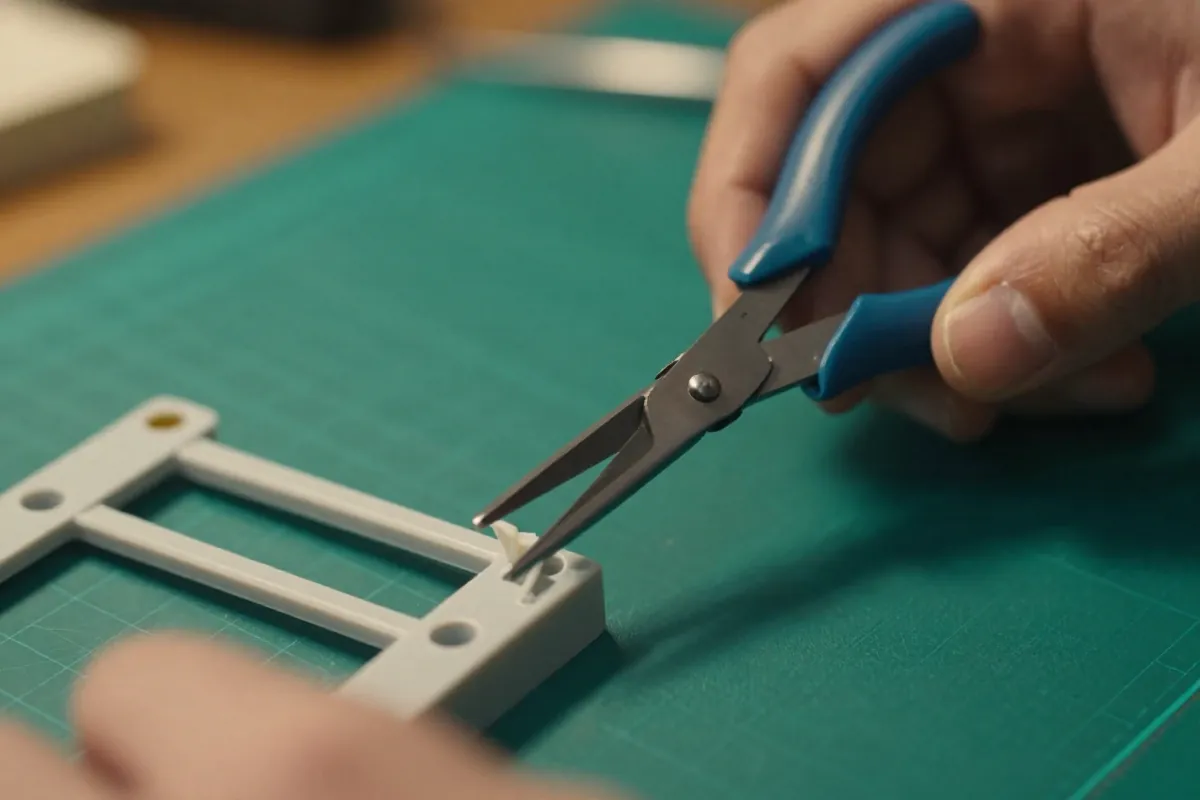
How should you use a hobby nipper?
Cut the part off the runner a few millimeters away first, then trim the remaining gate flush with the flat side of the nipper against the part. This two-pass cut is what keeps white stress marks away, whatever nipper you use.
Never cut metal, wire or thick runner plastic with a fine blade, and keep the cap on when you put it away. A good nipper lasts years if it only meets kit gates.
The verdict
A dependable workhorse that loses on value to the single blades in our formula. Great as the rough-cut tool next to a fine nipper.
Price on November 24, 2026, may have changed.

